Sep Tue 7:00 PMTuesdayНХК БургасBuy ticket
Where:НХК Бургас, 7:00 PM, Burgas
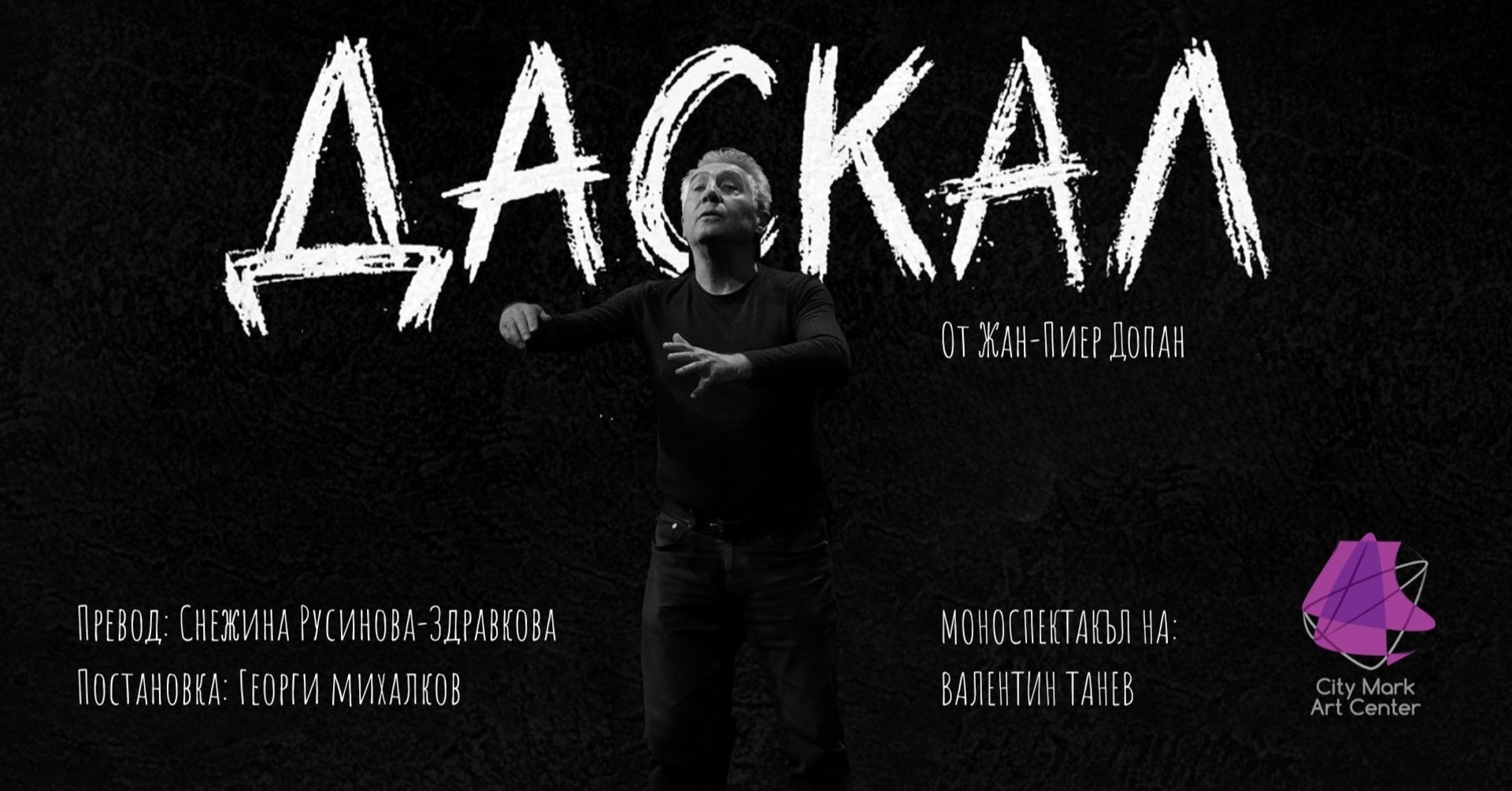
Daskal
„DASKAL“ – A PERFORMANCE THAT IS NOT WATCHED, BUT EXPERIENCED
An exceptionally powerful encounter between dramaturgy, the actor's craft, and confession awaits you during the performance „Daskal“
Actor Valentin Tanev steps into one of those roles that are not simply performed, but lived. Tanev does not seek flashiness, but truth. That is precisely what makes his performance so impactful.
This is theatre without unnecessary showiness – theatre of substance.
This is one of those productions that you don't just watch, you carry with you
„Daskal“ is theatre in its purest form – honest, painful, and necessary!
About the text and its path to Bulgaria
Daskal is the Bulgarian staging of L’Enseigneur (also known as Prof!) by the Belgian playwright Jean‑Pierre Dopagne, a razor‑sharp monologue from the mid‑1990s that has toured extensively and been translated widely across Europe. Bulgarian audiences first met the play in 2004 at the Ivan Vazov National Theatre with Velko Kanev; it returned in 2018 in a revival there. This new reading with Valentin Tanev premiered in Sofia on February 15, 2026 at City Mark Art Center, opening a fresh conversation about the teacher’s place in a changing society.
What you’ll experience in the hall
One actor holds the floor: a literature teacher, speaking as if before a tribunal, reconstructing the long road from vocation to rupture. The text is built as a confession—lucid, unsparing, sometimes darkly funny—where memories of beloved authors rub against the everyday friction of a classroom. Expect economical staging and close‑up acting; the tension is carried by voice, breath and silence as much as by words.
- Play by Jean‑Pierre Dopagne
- Translation from French: Snezhina Zdravkova
- Director: Georgi Mikhalkov
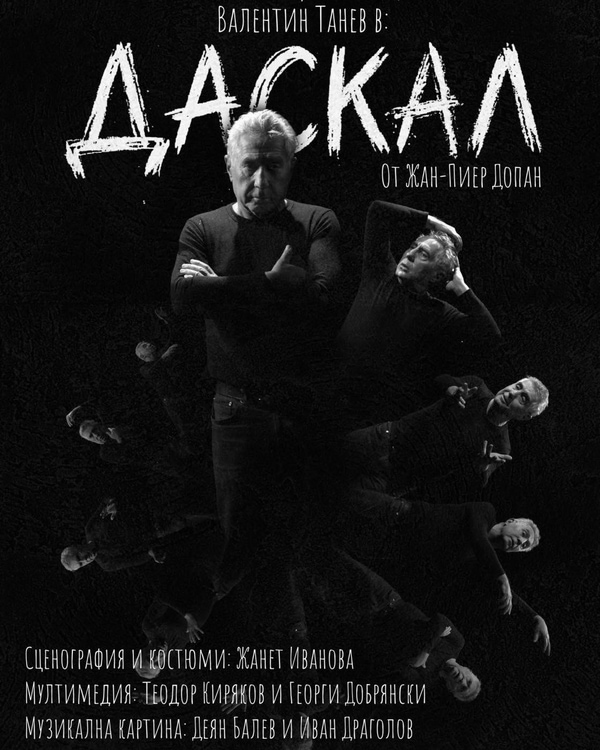
- Scenography and costumes: Janet Ivanova
- Multimedia: Teodor Kiryakov and Georgi Dobryanski
- Music: Deyan Balev and Ivan Dragolov
- Performed by: Valentin Tanev
Why Valentin Tanev matters here
A familiar face to the Ivan Vazov National Theatre public, Tanev brings decades of stage craft to the role, honed in productions ranging from The Spirit of the Poet to Attempt at Flying. His Daskal doesn’t chase effects; he maps a conscience. Tiny shifts—an intake of air, a glance that won’t settle—chart the way ideals corrode under ridicule, bureaucracy and fatigue. The result is theatre of proximity: the audience becomes the witness, and eventually, the jury.
Good to know
The staging favors intimacy over spectacle; latecomers may be seated after the opening minutes to preserve the monologue’s arc. Conversations often continue in the foyer—this is a piece that invites debate about education, responsibility and the ethics of “ends and means.”
If you follow actor‑driven chamber theatre and sharp contemporary writing on our stages, you might also explore titles like Savarsheni natrapnici, the relationship comedy Petak vecher, or character‑focused plays such as Vsicho tova e tya and Bez garanciya.
Event partner information:
City Mark Art Center Ltd.
UIC: 204070496
Tel: 02 955 74 78, 0878688821
Event partner information:
City Mark Art Center Ltd.
UIC: 204070496
Tel: 02 955 74 78, 0878688821
With:
Drama
120 min.